.jpg)
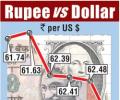
The rupee resumed slightly lower at 62.05 per dollar as against the last weekend's level of 62.04 at the Interbank Foreign Exchange market. It recovered to 61.88 per dollar before quoting 61.93 at 1045 hours.

Inflation in food articles inched up to 0.69 per cent in September.

'Without appropriate supervisory constraints in place, banks are in a position to delay the recognition of losses and engage in ever-greening or zombie lending, which is essentially the rolling over of debts of unviable borrowers that would have otherwise defaulted,' points out RBI Deputy Governor Viral Acharya.

What differentiates Rajan from his predecessors is his proactive steps in anticipating a problem and coming up with out-of-the-box solutions

There are glaring anomalies with Indian data and that could lead to wrong policy prescriptions.

So, while it is great that India's numbers look relatively good, don't raise a cheer just yet, points out T N Ninan.

The muted expectation of dealers come at a time when vehicle manufacturers such as Maruti Suzuki, Hyundai Motor, Mahindra & Mahindra and others reported a double-digit fall in wholesale dispatches to dealerships in July and August.

In New York, the dollar edged down against the yen for the first time in three sessions as investors weighed economic data and remarks from outgoing Federal Reserve Chairman Ben Bernanke.

In spite of Governor Raghuram Rajan's repeated concerns about inflation, many think there may still be a loosening of stance.

Global rating agency Moody's said India's economic growth remains weak and there is little chance of recovery next year.

Food inflation was 7.79 per cent last month, higher than a revised 7.47 per cent in May
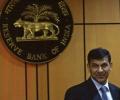
RBI Governor Raghuram Rajan on Friday said keeping inflation low is the key task for sustainable economic growth of the country.
Wholesale fuel prices in May fell 10.51 per cent year-on-year.
The previous bout of Fed withdrawal fears had threatened to spark a crisis of confidence in India -- sending the rupee to a record low of 68.85 in late August and leading to steep falls in bonds and stocks.

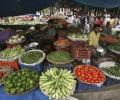
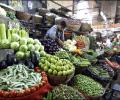
Vegetables tend to get damaged faster during summers.
Policymakers have been grappling with high prices for food staples such as onions and potatoes even after the central bank raised interest rates by a quarter percentage point in each of its previous two reviews.

With its new line-up, the firm has managed to touch the right chords, but to regain market share from the established players, Micromax will have to fight a protracted battle.

Metals, auto and banking shares were in the limelight in this session; the FMCG pack, however, ended lower.

Ban on high-value currency sends advertising industry into a tailspin.

If customers did not see value in what we provide them at the price point at which we provide these, they would not have been there with us in such a competitive market, says HDFC deputy managing director Paresh Sukthankar.

Sensex ended up 41 points at 29,136 and Nifty gained 4 pts to 8,809.
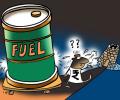
Inflation in the 'fuel and power' basket in December slumped to 8.38 per cent, nearly half of 16.28 per cent.

With the stock markets scaling new heights, Finance Minister P Chidambaram on Friday sounded a note of caution and asked investors to guard against excessive exuberance.

RBI recently cut repo by 0.25 percentage point, taking the rate to 7.25 per cent in three reductions since January.

If imputed inflation for April and May is used, then you have inflation of over 6 per cent for two consecutive quarters, which is a worrying signal for the RBI.
In a surprise move, the Reserve Bank on Wednesday left the repo rate unchanged at 7.75 per cent, while the cash reserve ratio too is retained at 4 per cent.

Rate sensitive sectors were among the top gainers with Tata Motors and ICICI Bank leading the gains on the Sensex.

As per commerce and industry ministry data, food inflation fell to 4.91 per cent in March from 7.79 per cent in the previous month.

Liquidity continues to be a worry for both, customers and dealers, with the latter facing working capital issues.
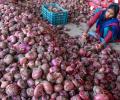
The Reserve Bank of India on Thursday raised its inflation projection to 5.1-4.7 per cent for the second half of the current fiscal on the back of spike in prices of vegetables such as onion and tomatoes.

While the farmers are not getting remunerative prices for their produce, at the same time they are forced to pay high prices for items they consume.

RBI is closely monitoring monsoon.

Raghuram Rajan, who was Chief Economic Advisor in the Finance Ministry before taking over as RBI Governor on September 4, is scheduled to announce the next mid-quarter policy review on December 18.

The repo rate has been unchanged since January, when the RBI increased it by a quarter percentage point.

The excise duty cut will translate into a reduction of Rs 9.5 a litre on petrol and Rs 7 a litre in diesel after taking into account its impact on other levies.

Sensex may remain under pressure this week due to weak global factors.

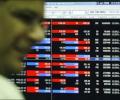
The broader markets ended in line with the benchmark indices- BSE Midcap and Smallcap indices ended higher by 1.3% and 0.9% each.

The global financial services major had earlier said that the central bank would keep its policy rates on hold.

According to the global financial services major, the Consumer Price Index based inflation is peaking off and is expected to be around 7.5-8 per cent in September.
